


EDK solutions
Challenge
An urban planning firm in New York City needed a tool to inform policy and help clients make data-driven decisions about replacing aging PTAC air conditioning systems with heat-pump systems as part of complying with NYC's Local Law 97. Manual spreadsheets and rule-of-thumb estimates weren't cutting it — building owners needed clear, defensible numbers covering cost, energy usage, and environmental impact, side by side.
Process
Defining the Problem
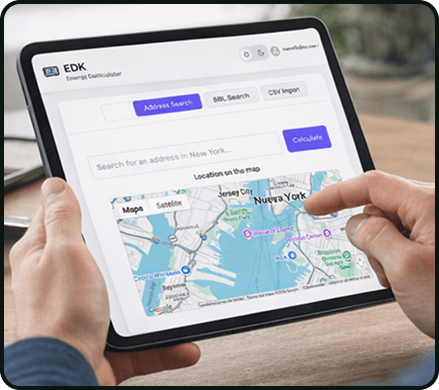
Before any code was written, we needed to understand what we were actually calculating. We mapped out every variable that goes into comparing an old gas-powered PTAC system against a new heat pump system, using AI-assisted analysis, API integrations, and good-old algebra to build a calculation model grounded in real-world data.
- Cost model: 20-year year-by-year projections covering upfront retrofit cost ($1,100/unit + installation + 10% contingency), loan amortization at market rates, and LL97 fine avoidance — which alone can reach $28,000/year per building by 2030
- Energy model: heating loads calculated using NYC-specific Equivalent Full Load Hours (491–987 hrs depending on building age and height), exposing cases where pre-war buildings face negative pure energy savings — and where LL97 savings close the gap anyway
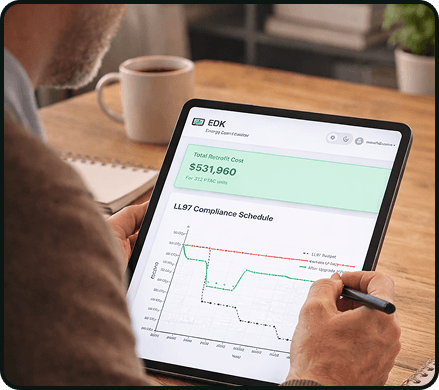
- Compliance model: tracked across all four LL97 milestone years (2026, 2030, 2035, 2050) using property-specific emissions budgets pulled from LL84 data, with automatic optimization of time-limited Building Emissions credits only available for upgrades completed before 2029
Coding and Delivering the Solution
With the calculation model locked in, we built a web-based application that lets EDK planners input building data — square footage, system age, current energy bills, building type — and instantly generate a side-by-side comparison report covering cost savings, energy reduction, and LL97 compliance projections. We worked in tight feedback loops throughout, reviewing outputs against real building cases to pressure-test the numbers.
Maintenance and Support
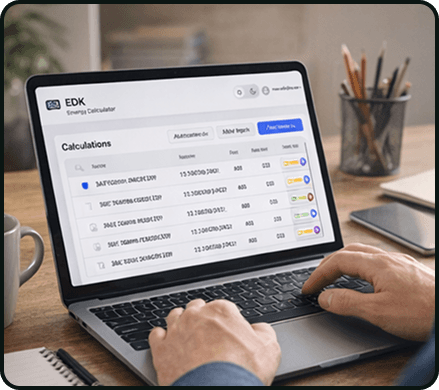
Launching the tool was the beginning of the relationship, not the end of it. NYC building regulations evolve — utility rates change, Local Law 97 penalty thresholds get updated, and new building classes get added. We stay on as a partner to keep the calculation model current, push improvements as usage scales, and turn around new features as EDK's client needs evolve.
Other Projects
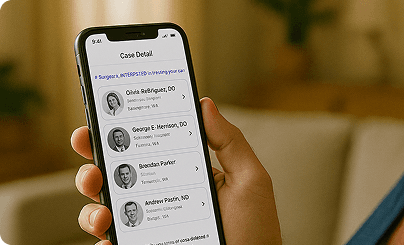
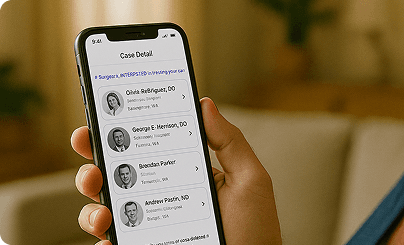
Ortho compass
HIPAA-secure platform connecting patients with local orthopedic surgeons based on injury and imaging.


Stealth startup
We can't say who or what — but we can talk about how we helped a pre-seed startup move fast with the right team structure.